



Will AI Replace Human Jobs in the Philippines? The Real Question Is Who’s Being Left Behind
Manila just had its moment of reckoning on AI and work. At the National AI & Skills Summit, LinkedIn’s Head of Insights and Data Analytics, Remko Glatzhofer, shared a number that should worry every Filipino professional. AI job postings in the Philippines grew 30 percent year-on-year. Yet our AI hiring rate sits at just 1.35 percent. That puts us behind Singapore (5.86 percent), Thailand (2.95 percent), Vietnam (2.72 percent), Malaysia (2.65 percent), and Indonesia (1.65 percent).
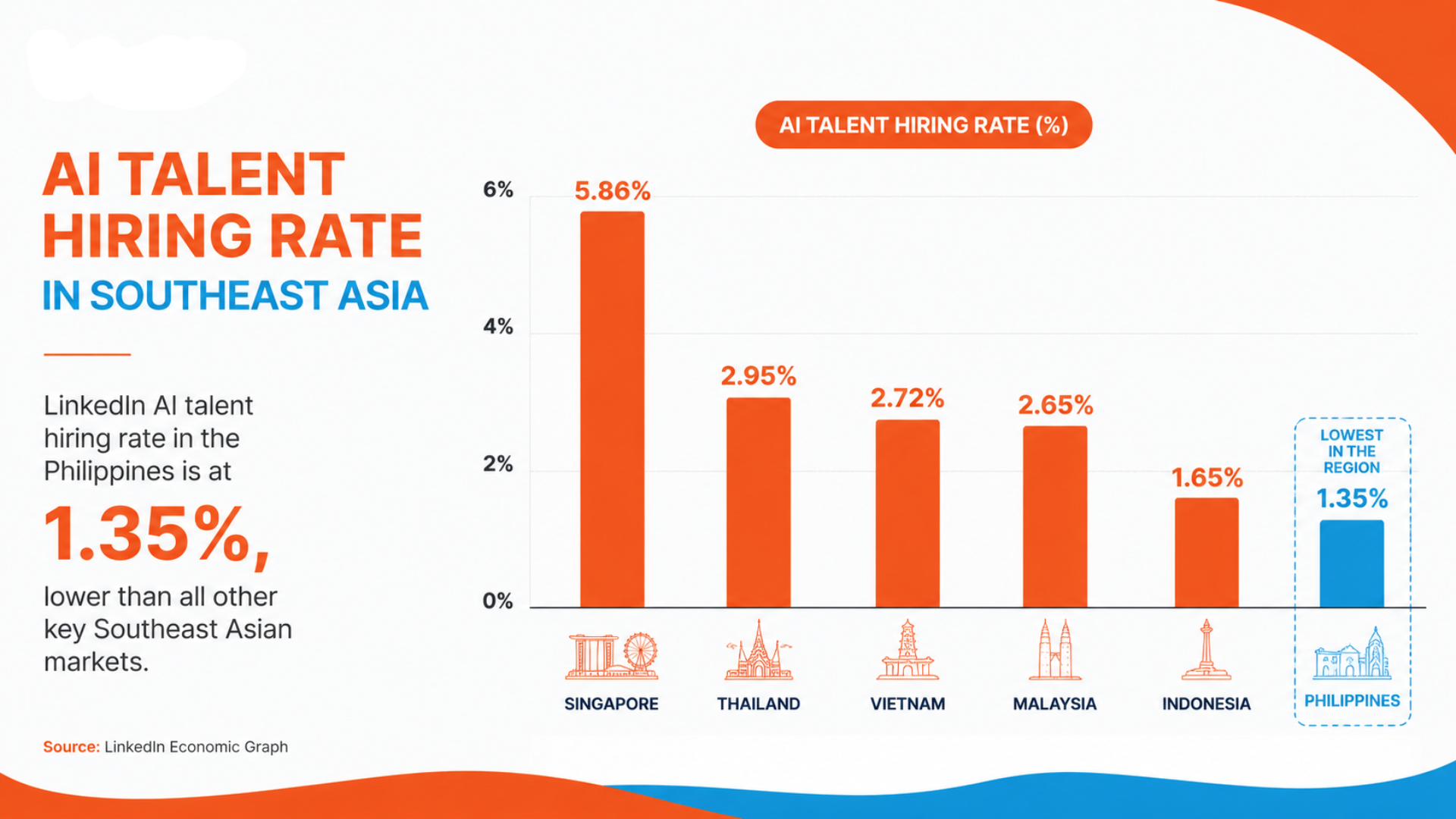
This means that AI jobs are showing up faster than the skills are.
That gap is the real answer to “will AI replace human jobs” in the Philippines. It’s not a yes-or-no question. AI isn’t replacing workers wholesale. It’s replacing workers who didn’t get the chance to adapt. And right now, too many Filipinos aren’t getting that chance. This is exactly what fuels the wider AI skills gap in the Philippines that employers keep running into.
The Conversation Is Missing a Huge Chunk of the Workforce
Most of the AI-and-jobs talk fixates on a narrow slice of roles: data scientists, prompt engineers, machine learning specialists. Useful, but incomplete. It talks past a much bigger group. Think of the Filipino professionals in traditional BPO and office roles: customer service, back-office processing, admin support. These are the workers watching AI quietly absorb pieces of their day-to-day work.
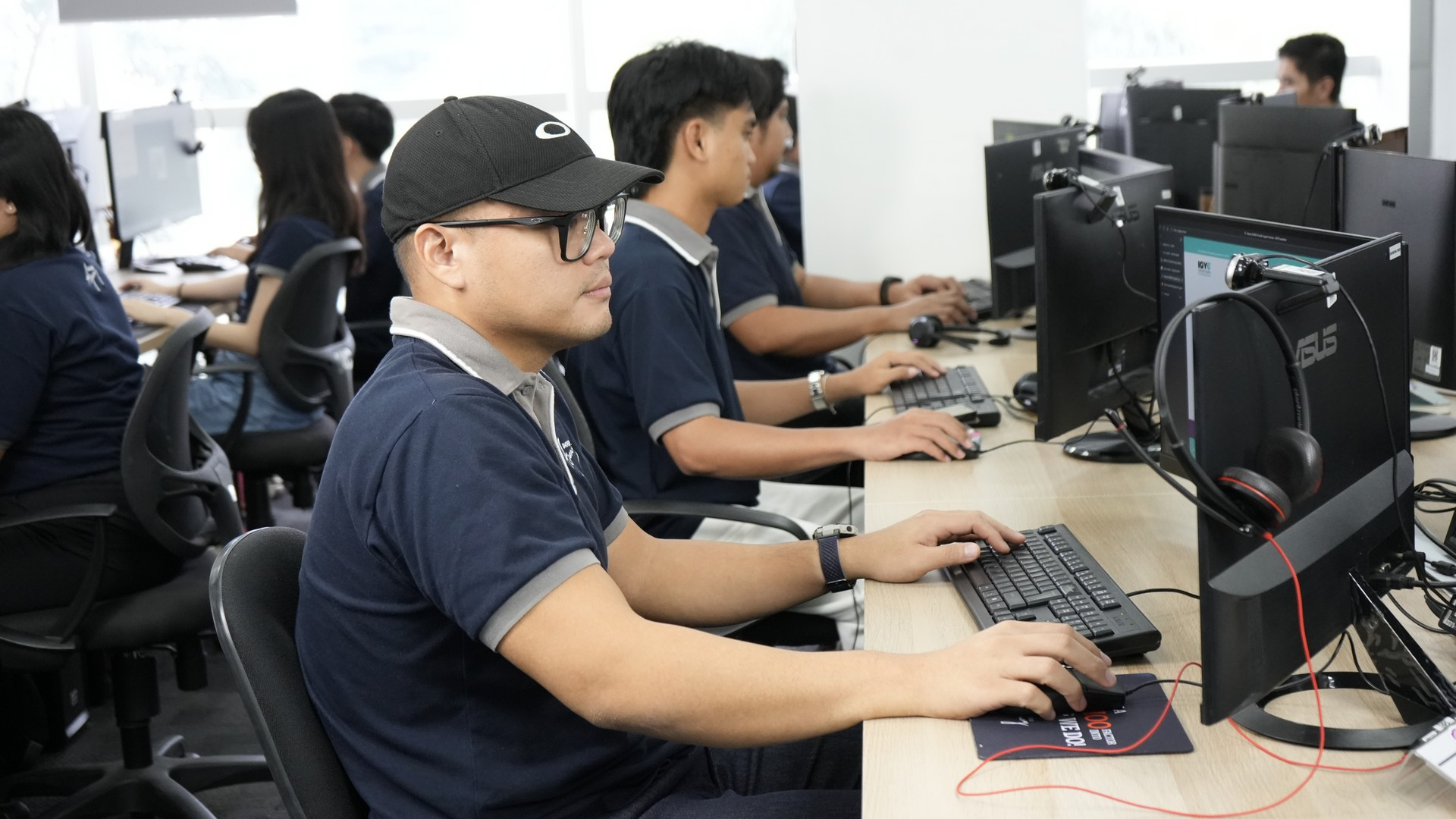
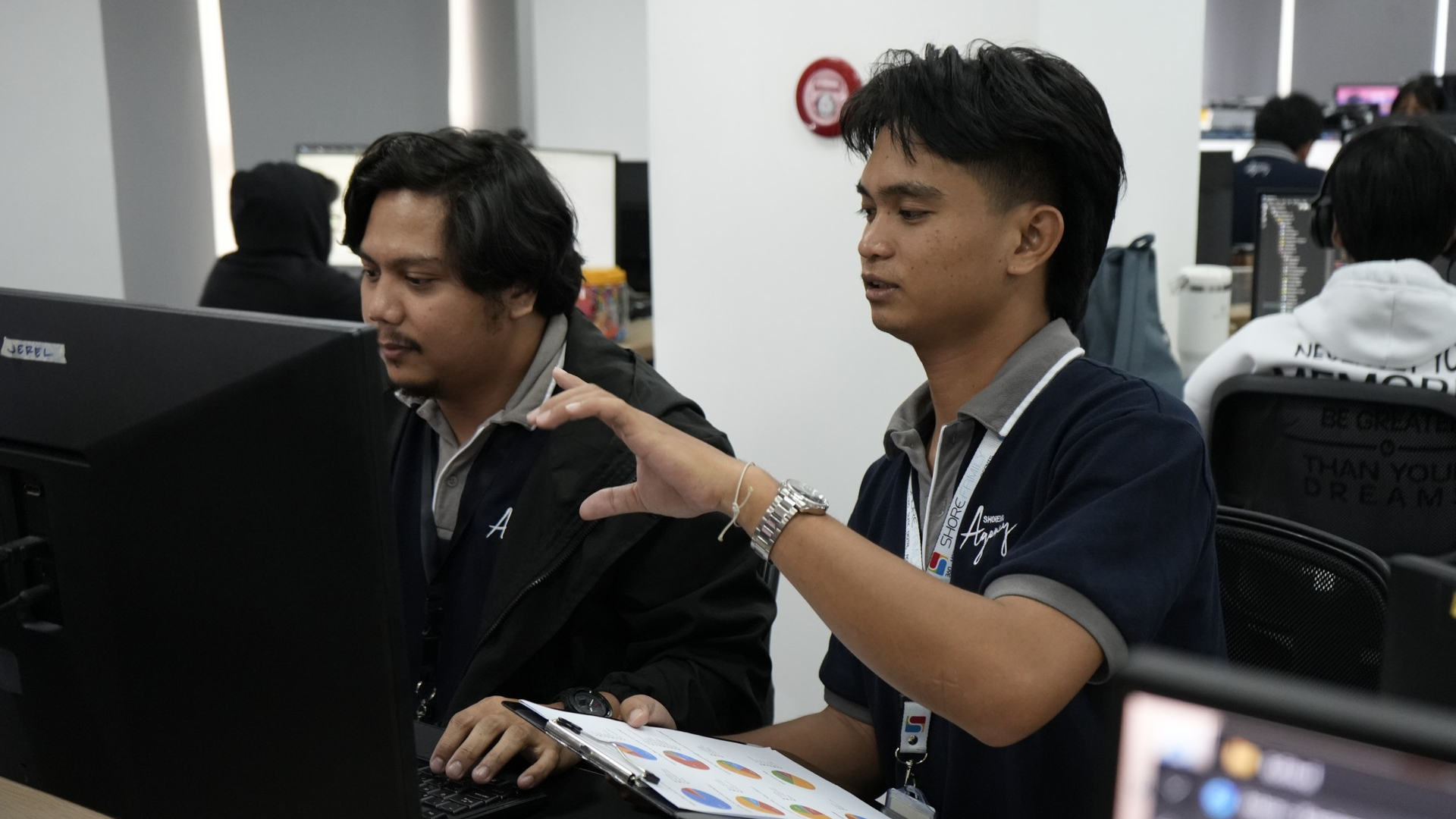
Here’s what that gap looks like from where we sit. Most of the entry-level clerical talent we screen, including voice agents, data-entry staff, and administrative assistants, arrive with little practical exposure to AI tools. For most, it goes no further than the occasional use of a free chatbot to draft or tidy up text. The technology dominates the headlines, but It simply hasn’t reached their daily work yet.
Employer habits haven’t caught up either. Plenty of hiring managers still file AI skills under “nice-to-have,” yet at Shore360 we treat them as core to how we screen. When a candidate hasn’t used these tools before, what we’re really measuring is how quickly they can learn. AI-readiness now counts for as much as the experience already on a CV.
This is the part of the AI story that doesn’t make headlines. But it’s the part we see daily as a recruitment platform working with employers across Accounting, Admin & Office Support, ICT, Marketing, Engineering, and Real Estate. The AI skills gap isn’t abstract for these workers. It’s the difference between staying relevant and quietly becoming optional. That tension now sits at the centre of the future of work in the Philippines.
Donald Lim, President of the Management Association of the Philippines, put it plainly at the summit: “We have to, as [an] industry, we have to have that discipline of data so AI can amplify it. Otherwise, we will [be] walking around in circles.” That discipline has to start with people, not just systems. And right now, the people doing the most foundational BPO work have the least access to structured AI training.
Upskilling Isn’t Optional Anymore, For Workers or Employers
Glatzhofer was also direct about where responsibility sits: “Not all the leaders understand AI well enough to actually understand what it means for the organization.” That’s a structural problem, not a worker failure. Employees can’t be expected to upskill on their own if leadership hasn’t defined what AI competency even looks like for their roles.
This is where government and industry are starting to move. The Technical Education and Skills Development Authority (TESDA) has allocated ₱175 million to support 4,370 scholars in AI and data skills training. It’s a real, if modest, start toward reskilling the Filipino workforce at scale. Lito Villanueva, Founding Chairman of the Fintech Alliance PH, added a useful framing for employers: “You cannot go into full AI without you having to come out with your data enterprise framework.” AI adoption only succeeds with a clear workforce plan behind it.
For job seekers, the takeaway is simple. Upskill training for AI jobs in the Philippines isn’t a nice-to-have credential anymore. It’s becoming baseline. Whether you’re in customer support, accounting, or admin, even basic AI literacy training is starting to separate candidates who get shortlisted from those who don’t. That means knowing how generative tools fit into your workflow, understanding data hygiene, and recognising where automation helps versus where it cuts corners.
What “Upskill Training for AI Jobs in the Philippines” Actually Looks Like
It doesn’t have to mean switching careers into tech. For most workers, practical AI upskilling looks like this:
- Learning how AI tools are used in your current industry, such as AI-assisted reporting in accounting or AI-driven CRM tools in customer service
- Understanding data discipline. Clean, accurate data is what makes AI useful, and that discipline starts with the people entering and managing it every day
- Building comfort with prompt-based tools relevant to your function, even at a basic level
- Staying alert to which parts of your role are being automated, and which parts still need judgement AI can’t replace. That distinction is becoming central to how BPO jobs and AI intersect across the industry
How Shore360 Is Adapting to AI
As the recruitment division of Shore360, Jobs360 sees this shift from both sides: the job seekers walking in and the employers deciding who to hire. Shore360 is already responding to it, and where we are pointing our attention says the most: the entry-level worker.
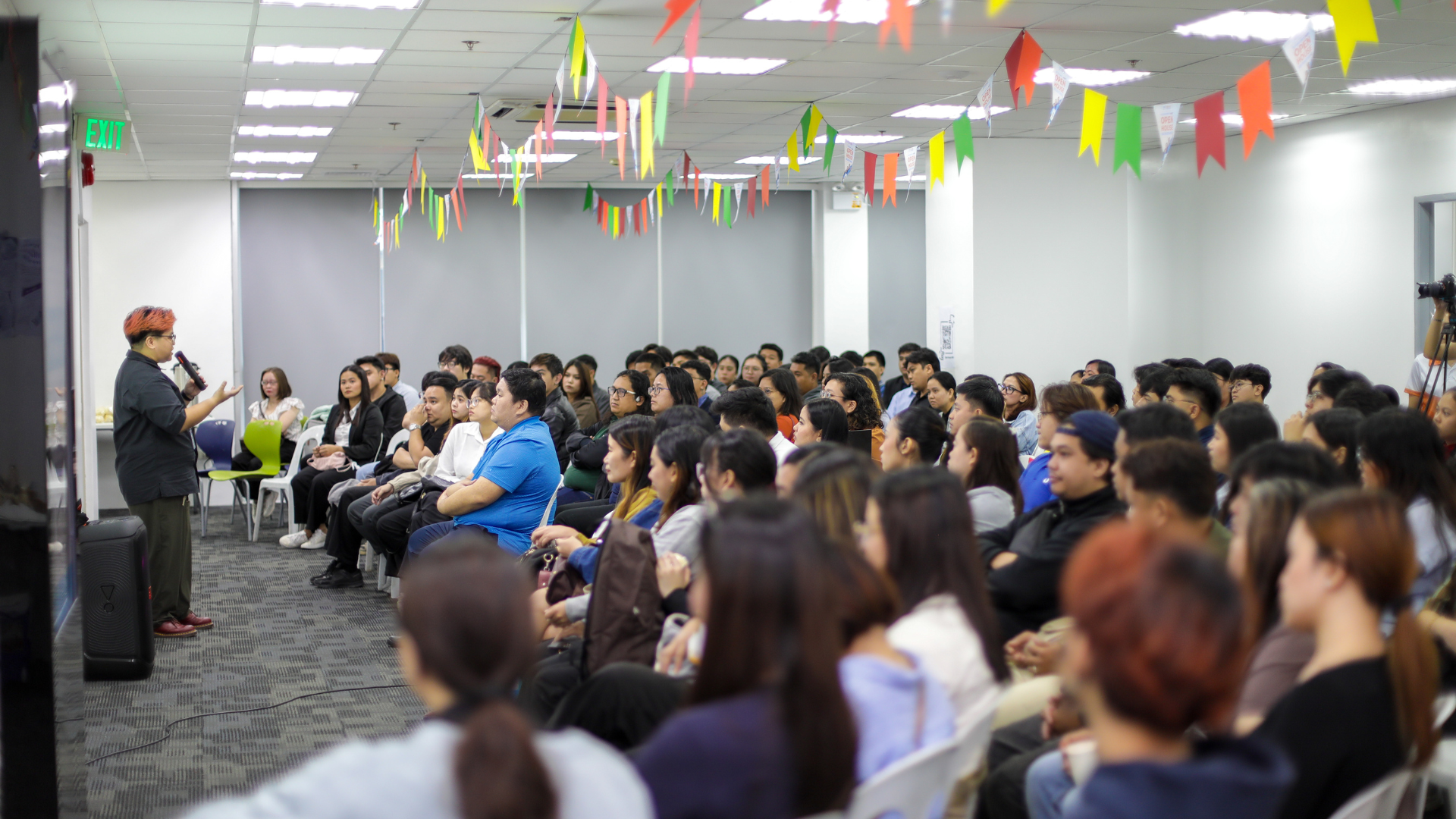
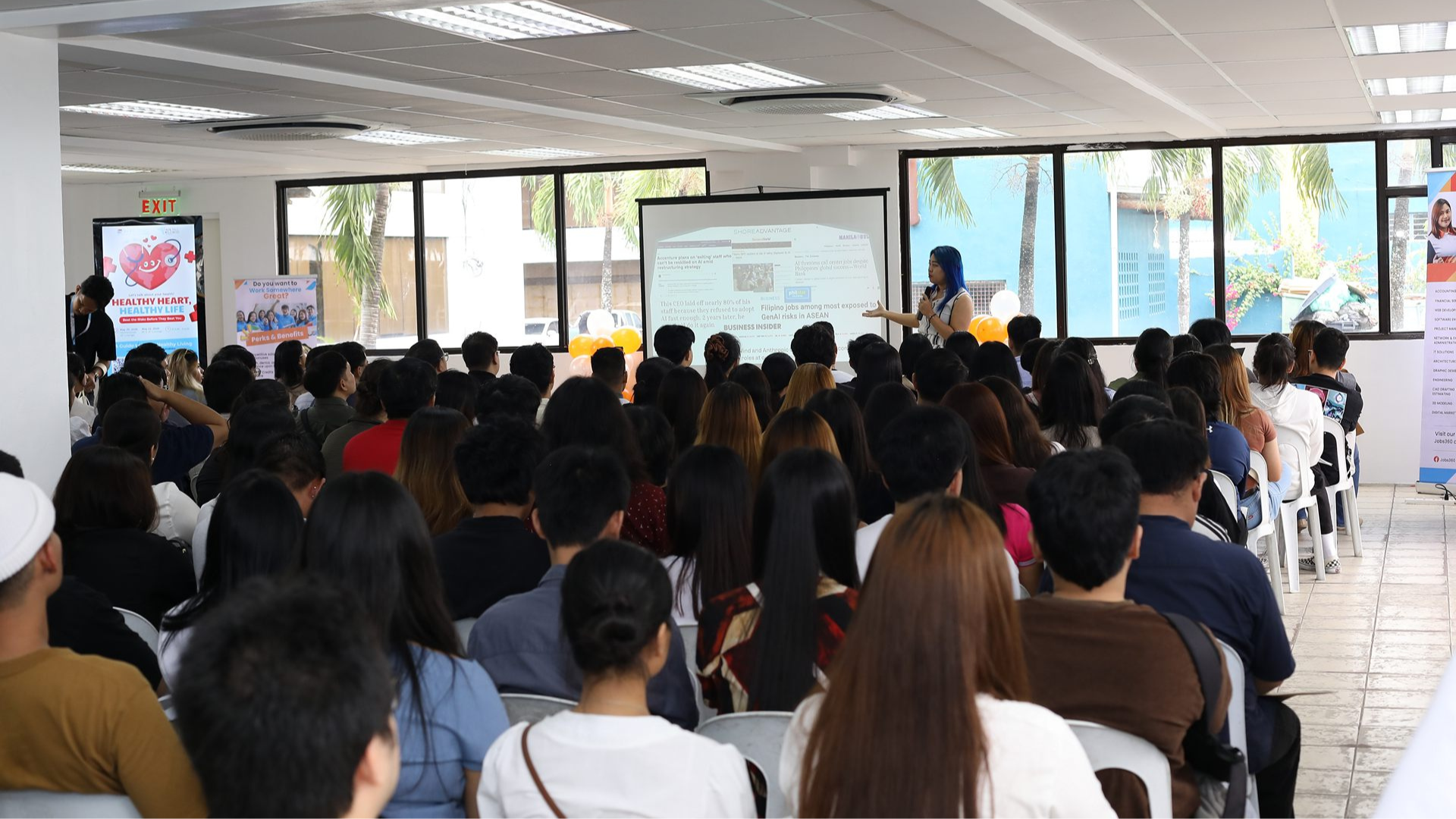
That is the thinking behind our recent Open House recruitment seminar, “Skip the Junior Grind: How You Can Use AI to Leapfrog the Entry-Level Gap and Thrive in the ‘Judgement’ Economy.” The “junior grind” is the old path: start at the bottom, spend years on repetitive, rules-based tasks, and slowly earn your way into work that needs judgement. Trouble is, those repetitive tasks are exactly what AI absorbs first, which can make it feel like the bottom rung has been sawn off.
The seminar’s answer is to skip that rung. An entry-level worker who can direct AI, check it, and catch its mistakes is already doing judgement work that used to take years to reach. For the reader, the takeaway is simple: the goal is not to beat AI on speed, but to become the person who decides what it should do and whether its output is any good.
The Bottom Line
AI isn’t going to replace Filipino workers as a category. But it will replace workers who don’t get support to adapt, across every industry, not just tech. The 30 percent rise in AI job postings is an opportunity. The 1.35 percent hiring rate is a warning. Closing that gap means treating AI upskilling as standard workforce development, not a specialised add-on for a handful of tech roles.
The workers carrying the BPO and traditional office sector forward deserve to be part of that conversation, not an afterthought to it.