


Learning how to find your first job after college used to come down to your diploma and a bit of luck. Not anymore. Today almost every fresh graduate can reach for the same AI tools, read the same advice and produce a similar-looking CV. When everyone starts from the same place, what sets you apart is proof of what you can actually do.
So the real question is no longer “how do I get hired without experience?” It is “how do I show an employer I’m ready to work?” This guide walks you through how to build that proof, sharpen the skills that matter now, and choose a first job that takes you somewhere.
Why a First Job Is Harder to Land Right Now
Landing a first job has always taken effort, but the ground has shifted. Unemployment in the Philippines has been rising, which means fresh graduates aren’t only competing with each other. You’re up against experienced professionals who’ve been displaced and are applying for the same roles.
Automation is changing what employers want, too. As companies automate routine tasks, they’re hiring fewer people to simply do the work and more people who can run it, check it and make decisions. They want operators, not just doers.
As Jobs360 Director Chiqui Milag often points out, this isn’t a reason to lose heart. It’s a reason to be deliberate. Knowing why the market is tighter tells you exactly what to prove.
Build Proof of What You Can Do

Here’s the catch with everyone having AI: it makes almost everyone look capable on paper. The same tools, the same templates, the same polished answers. What AI can’t hand you is real experience, and that’s exactly why it has become the strongest currency in the job market.
You don’t need years of it. You need proof that’s relevant to the job you want. That can come from many places:
- On-the-job training, internships or apprenticeships
- University projects or a capstone that shows real research, tools or results
- Freelance, part-time or volunteer work
- A portfolio, GitHub or Behance for creative and technical fields
- Certifications, microcredentials or competitions
The key word is relevant. A pile of unrelated experience gives you no edge. One project that maps to your target role tells an employer far more than a long list that goes nowhere.
So decide early what you’re building toward. Instead of trying a bit of everything, choose the skill set and the kind of proof that fit the career you actually want. When you pick a lane and gather experience that points the same direction, you stop looking like every other applicant and start looking ready.
The Skills That Matter in 2026
If experience is your proof, skills are what make that proof believable. Two kinds matter now, and you need both.
The first is digital. AI literacy, basic data literacy and comfort with the tools of your field are quickly becoming baseline, not bonus. But knowing how to prompt an AI tool isn’t the skill employers are really after. They want people who can judge whether the output is any good, catch where it’s wrong and use it well.
The second is human, and it’s where you outpace the machine: critical thinking, clear communication, problem-solving and the ability to adapt. These are the operator skills from earlier. AI can draft, calculate and summarise. Deciding what to do with all of it is still your job.
Make Your Application Easy to Say Yes To

Once you have proof and skills, present them so an employer sees the fit fast.
Tailor your CV to each role. Don’t send one generic version everywhere; make sure the experience you highlight is the experience that matches the job. Lead with a short professional summary instead of an old-style objective, keep your contact details current and accurate, and use a clean, professional photo (an AI-tidied 2×2 selfie works fine). Many CVs also pass through automated resume screening before a person ever reads them, so keep the format simple. If you want the mechanics, here’s how to make ATS friendly resume.
Build a footprint beyond a single profile: LinkedIn, the job platforms where your target employers post, and a portfolio if your field calls for one.
Then get in front of people. Networking now is hybrid, part online and part face to face, and in-person job fairs are busier than ever. Look into the Department of Labor and Employment’s Trabaho Agad job fairs and your local Public Employment Service Office (PESO). For more, see our job hunting tips for fresh graduate.
Choose a First Job That Takes You Somewhere
When an offer comes, it’s tempting to say yes to the first one. But your first job sets your direction, so weigh it properly. Look past the starting salary and ask what the role actually gives you.
Will you learn something that builds toward where you want to go? Is the role clear, or a vague catch-all? Does the employer invest in developing its people? What’s the work arrangement? On-site offers the most mentorship and visibility early on, while remote or hybrid gives you flexibility but asks for more self-direction. And is the company one you can trust and grow with?
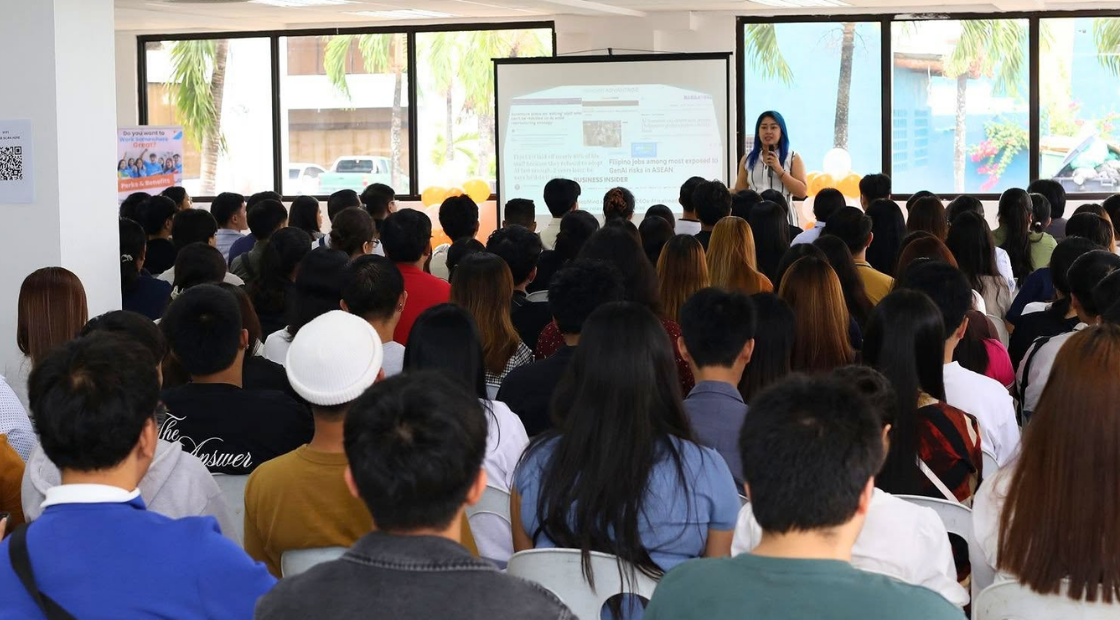
This is also where you can get ahead before you’re even hired. Jobs360’s ShoreAdvantage Open House lets fresh graduates see how Filipino professionals are building AI-ready skills firsthand. It’s a practical way to sharpen your edge and meet people already doing the work, so it’s worth attending.
You’re More Ready Than You Think
The market is tighter, but you’re not powerless in it. Build proof that’s relevant, sharpen the skills only you can bring, and choose a role with room to grow. Move with intention, and you’ll show employers exactly what they’re looking for: someone who’s ready.