









When evaluating a job offer, most people go straight to the salary. But employee benefits in the Philippines can be just as valuable as the number on your contract, sometimes more. Healthcare coverage, government contributions, and leave entitlements directly affect your financial security, your health, and your quality of life at work.
Before you accept any offer, it helps to know exactly what you are entitled to by law and what separates a good employer from one that only does the bare minimum.

Government-Mandated Benefits Every Employee Should Receive
Mandatory employee benefits in the Philippines are not perks. They are rights guaranteed to every private sector employee from day one of employment, regardless of whether you are probationary, regular, contractual, or project-based.
Every employer is required by law to enroll you in three government programs:
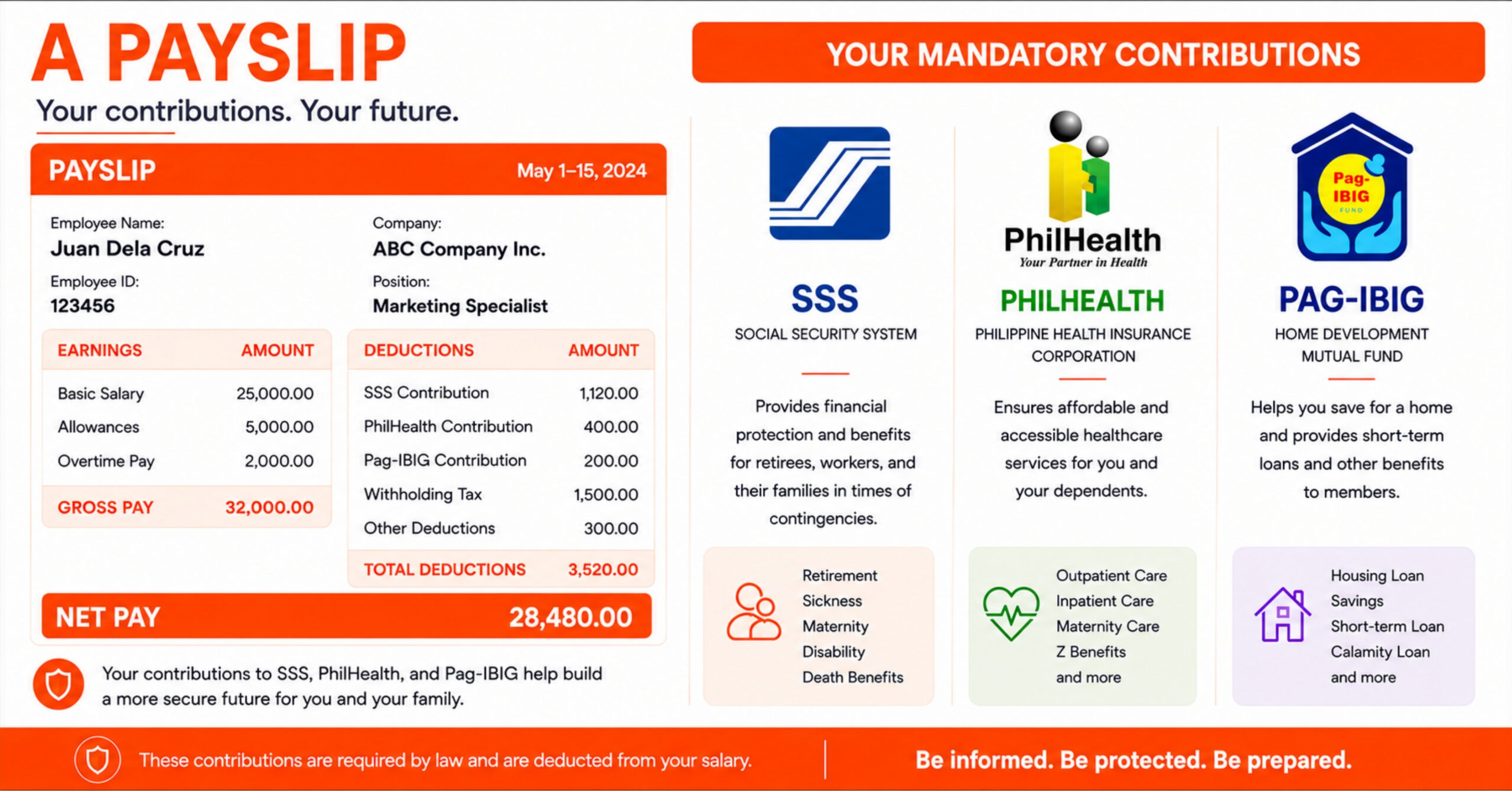
- SSS (Social Security System) covers sickness, disability, maternity, retirement, and death benefits. The total contribution rate for 2026 is 15% of your monthly salary credit, with the employer shouldering 10% and the employee contributing 5%.
- PhilHealth provides health insurance coverage for hospitalization and outpatient services. The premium rate is 5% of your monthly basic salary, split equally between you and your employer, with a minimum contribution of PHP 500 and a maximum of PHP 5,000 per month.
- Pag-IBIG Fund is a housing and savings program that also allows short-term and multi-purpose loans. The contribution rate is 2% of your monthly salary, with the employer matching your contribution. The maximum employee deduction is typically PHP 100 per month.
On top of SSS Pag-IBIG PhilHealth contributions, employees are also entitled to 13th month pay, paid service incentive leave, and holiday pay. Understanding how to compute for 13th month pay is useful because it helps you verify whether what you receive at the end of the year is accurate.
How to Check If Your Employer Is Actually Remitting Your Contributions
Here is something many Filipino workers only find out too late. Some employers deduct contributions from your salary but never actually remit them to SSS, PhilHealth, or Pag-IBIG. You only discover this when you try to make a claim, apply for a loan, or check your records and find that nothing was ever posted.
According to Employee Statutory Benefits in the Philippines as Mandated by DOLE (2026), non-remittance of government contributions is a serious labor violation. But it happens more often than people realize, particularly in smaller companies and some BPO agencies in the Philippines
The good news is that all three government agencies have online portals and mobile apps that let you check your contribution history anytime. Here is how to access each one:
SSS (Social Security System)
If you do not have an account yet, go to sss.gov.ph and click “Create account” you will need your SSS number, a valid email address, and a few personal details to complete the registration. You can also download the MySSS mobile app on iOS or Android and register there. Once registered, go to “Contributions Inquiry” to see your full contribution history. SSS also sends an SMS alert every time a new contribution is posted, so you can monitor it in real time without even logging in.
PhilHealth
Visit the PhilHealth Member Portal at memberinquiry.philhealth.gov.ph and click “Register as New User.” You will need your PhilHealth Identification Number (PIN) and a valid email address. Once your account is active, you can view your posted contributions per month under the contribution history tab.
Pag-IBIG Fund
Go to pagibigfund.gov.ph and click “Virtual Pag-IBIG.” First-time users need to register using their Pag-IBIG MID number and personal details. After logging in, check your Member’s Statement of Account to see if contributions are being posted regularly. Pag-IBIG also has a mobile app called Virtual Pag-IBIG available on both iOS and Android.
Red flags to watch out for:
- Your first month’s contribution was not posted after 30 days of employment
- You receive no SMS alerts from SSS even after several payroll cycles
- HR is vague or avoids answering when you ask about your contribution numbers
- Your payslip shows deductions but the government portal shows no records
If a company cannot confirm that they remit these contributions on time, that is already a red flag worth paying attention to. If you suspect non-remittance, you can file a complaint through the DOLE online portal or call their hotline at 1349.
PhilHealth vs HMO: Why One Is Not Enough
A lot of job seekers assume that PhilHealth covers all their medical needs. It does not. PhilHealth is a government health insurance program that helps reduce hospitalization costs, but it was never designed to replace full healthcare coverage.
The Complete Guide to PhilHealth Benefits and Coverage (2026) explains that while PhilHealth handles case rates for specific conditions and procedures, out-of-pocket expenses can still be significant for consultations, dental care, and non-emergency services not covered under the program.
This is where HMO benefits for employees come in. An HMO, or Health Maintenance Organization, is a private health plan that most employers provide on top of PhilHealth. A good HMO plan typically covers:
- Outpatient consultations and specialist visits
- Annual physical examinations
- Emergency and inpatient hospitalization
- Prescription and laboratory benefits
- Dental and optical coverage depending on the plan
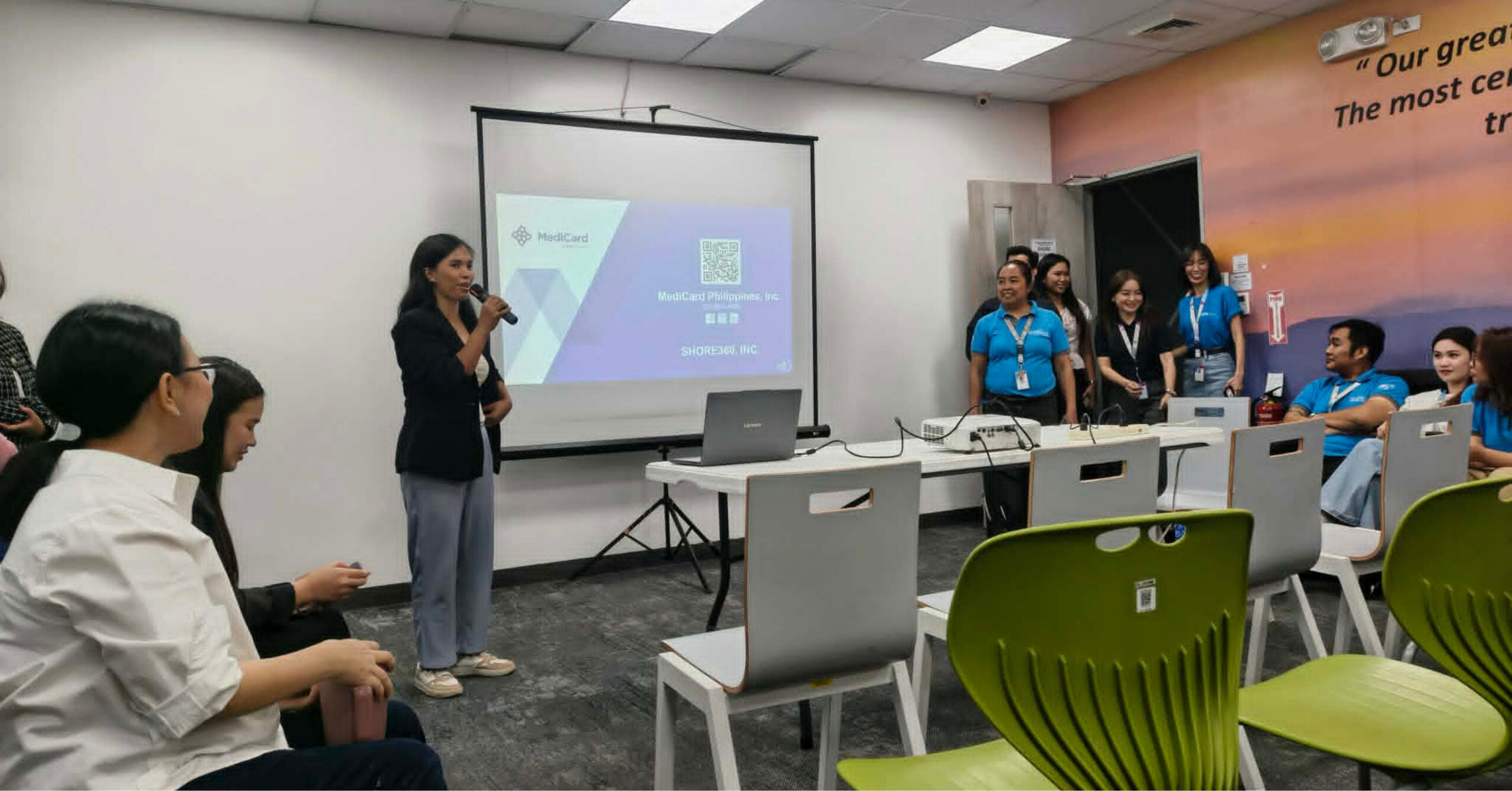
One important thing to clarify when reviewing a job offer is when HMO coverage begins. Most companies activate HMO upon regularization, which is typically after six months of employment. Some positions come with HMO coverage starting on day one, though this varies per company and per role. If you find a position through Jobs360, it is always worth asking about the specific HMO coverage and when it begins because perks and timelines differ depending on the employer.
Leave Benefits: What the Law Requires and What Good Employers Offer
The law requires employers to provide five days of service incentive leave per year. These can be used for vacation or sick purposes and can be converted to cash if unused by the end of the year. Beyond that, competitive companies offer significantly more.
Maternity Leave in the Philippines
Under the Expanded Maternity Leave Law (RA 11210), female employees are entitled to paid maternity leave regardless of employment status. The number of days depends on the type of delivery:
- 105 days for normal/cesarean delivery
- 120 days for solo parents, who are entitled to an additional 15 days of paid leave
- 60 days for miscarriage or emergency termination of pregnancy
Maternity leave in the Philippines is paid through SSS, not by the employer directly. The SSS shoulders the benefit based on your average daily salary credit, so it is important to make sure your contributions are up to date before your expected delivery.
Paternity Leave in the Philippines
Fathers are also entitled to leave benefits under Republic Act 8187, also known as the Paternity Leave Act of 1996. Here is what you need to know:
How many days is paternity leave? Seven working days of fully paid leave, shouldered by the employer, not SSS.
Who is eligible?
- Legally married male employees in the private or public sector
- All employment statuses are covered including regular, probationary, contractual, and project-based
- Applies to the first four deliveries or miscarriages of the legal spouse
Is paternity leave paid? Yes. It is fully paid by the employer and cannot be converted to cash if unused.
How to file paternity leave:
- Notify your employer or HR as early as possible, ideally before the expected delivery date
- Submit a completed paternity leave notification form
- Provide a copy of your PSA marriage certificate
- Submit proof of pregnancy such as a medical certificate or ultrasound result

When can you use it? You can use Paternity Leave in the Philippines before, during, or after your wife gives birth. You can also split the days. For example, take one day before delivery and use the remaining days after. The leave must be used within 30 calendar days before or after the date of delivery or miscarriage.
Can it be extended? Yes, under RA 11210, the mother has the option to transfer up to seven days of her maternity leave to the father, which can extend paternity leave to a total of 14 days.
If your employer refuses to grant your paternity leave, you can file a complaint through the DOLE online portal or call the DOLE Hotline at 1349.
Other Leave Types Worth Asking About
Beyond the legally mandated leaves, look for companies that offer:
- Separate vacation and sick leave counters
- Birthday leave
- Mental health or wellness leave
- Bereavement leave for immediate family members
- Solo parent leave under RA 8972
Other Benefits Worth Asking About
Beyond healthcare and leave, a competitive benefits package reflects how much a company values its employees. These vary between companies but are worth raising during the offer stage.
Common voluntary benefits that good employers offer include:
- Transportation or meal allowances
- Performance bonuses or mid-year bonuses
- Rice allowance or de minimis benefits
- Learning and development budget for upskilling
- Retirement plan or additional savings programs
These benefits are not legally required, but they signal how a company treats its people beyond the minimum standard. Companies that invest in these areas tend to have lower turnover and stronger workplace culture.
The best employers understand that taking care of their people goes beyond what is written in the contract. Some companies go further by offering shuttle services to ease the daily commute, training programs that help employees grow professionally, and attendance-based incentives that reward consistency. Others build a workplace culture around engagement through sports competitions, wellness events, cultural celebrations, bay decoration contests, and community outreach programs that give employees a sense of belonging beyond their desk.
Shore360 is one example of a company that takes this seriously. If you come across a role through Jobs360, it is worth asking about the full benefits package because what is offered often goes well beyond the standard.

These are the kinds of benefits that do not always show up in a job description but make a real difference in how you experience work every single day.
Before You Say Yes to That Job Offer
Most people spend more time negotiating salary than they do reviewing benefits. That is a mistake. A job that pays slightly less but offers full HMO coverage, generous leave, and reliable government remittances can be worth more in total compensation than a higher base salary with minimal support.
Before signing anything, here are the questions worth asking:
- Are SSS, PhilHealth, and Pag-IBIG contributions remitted on time?
- When does HMO coverage begin and what exactly does it include?
- How many leave days are provided beyond the legal minimum?
- Is there a 13th month pay and are there additional bonuses?
- Are there learning, upskilling, or career development opportunities?
A company that is serious about its people will have no problem being transparent about what they offer. If they are vague, dismissive, or cannot give clear answers about basic benefits, pay attention to those toxic workplace signs before you commit to a role you may later regret.
The right job does more than pay you. It takes care of you.