








AI tools such as ChatGPT, Teal, and Kickresume have changed how Filipino job seekers prepare their applications. Instead of starting from a blank document, many applicants now use a resume builder to produce a first draft, improve phrasing, and align their experience with the language in a job posting. When used well, these tools can help you create an ATS-friendly resume faster and with stronger keyword alignment than working from scratch.
However, the quality of the output still depends entirely on what you put in and how much you edit before submitting. Recruiters in the Philippines review dozens of applications each day and have become familiar with the patterns AI produces. A resume that reads as though it was generated and submitted without review can weaken an application just as easily as one with spelling errors or poor formatting.
This guide is specifically about the AI side of the process: how to get better results from these tools, where they fall short for Filipino applicants, and how to edit the output so it sounds like you and holds up under a recruiter’s review.
What AI Resume Tools Can Actually Do for You
The practical value of AI in resume writing comes down to three tasks: organizing your information, improving how you describe your experience, and matching your language to a specific job posting. Each of these can save time, but each also has limits worth understanding before you rely on the output.
Structuring a resume from scratch. If you are unsure how to order your sections or present your background clearly, AI can suggest a layout quickly. This is especially helpful for fresh graduates, career shifters, and applicants in the Philippines who have limited experience in writing a professional resume. The tool handles the scaffolding so you can focus on the content.
Turning vague descriptions into stronger statements. This is one of the most useful resume writing tips for anyone working with AI. A bullet point such as “Responsible for handling customer complaints” tells a recruiter very little. You can improve it with a prompt like:
“Rewrite this resume bullet point to sound more results-oriented and professional: ‘Responsible for handling customer complaints in a BPO company in the Philippines.'”
The tool may return something like: “Resolved an average of 40 customer complaints daily while maintaining a 95% satisfaction rating across voice and email channels.”
That version is clearer and provides stronger context. But the numbers must come from your real performance. AI does not have access to your employment records, targets, or quality assurance scores. If you cannot verify the claim in an interview, remove it or replace it with an accurate figure.
Aligning your resume with a specific job posting. You can paste a job description alongside your current resume and ask the tool to adjust the wording so it reflects the role’s requirements. This improves keyword alignment, which is how applicant tracking systems score and rank applications. Try a prompt such as:
“Here is a job posting for a Customer Service Representative in Clark, Pampanga. Here is my current resume. Adjust my bullet points to better match the job requirements without adding experience I do not have.”
That final instruction is essential. Without it, AI may add responsibilities, skills, or results that do not reflect your actual experience. Philippine job ads often use specific terms tied to local industry standards, such as “voice and non-voice accounts,” “DOLE compliance,” or “government-mandated benefits.” If your resume uses different phrasing for the same experience, an ATS may not make the connection, so matching the job posting’s language matters.
Where These Tools Fall Short for Filipino Applicants
AI tools are trained primarily on overseas data, and this creates specific gaps when Filipino job seekers use them without adjusting the output for the local market.
They default to foreign context. Most models do not distinguish between a BPO customer service role in Pampanga and a call centre position in the United States. They may use American English spelling, omit local certifications, or apply terminology that Philippine recruiters do not recognize. Unless you provide clear instructions about the local setting, the result may read as though it was prepared for an overseas employer rather than a hiring manager in Clark, Makati, or Cebu.
They overpromise. AI tends to make responsibilities sound more senior or strategic than they were. A simple statement such as “Managed a team” can become “Spearheaded cross-functional initiatives across multiple verticals.” When the language suggests a level of authority that does not match your experience, recruiters notice, and it raises questions about accuracy before an interview even takes place.
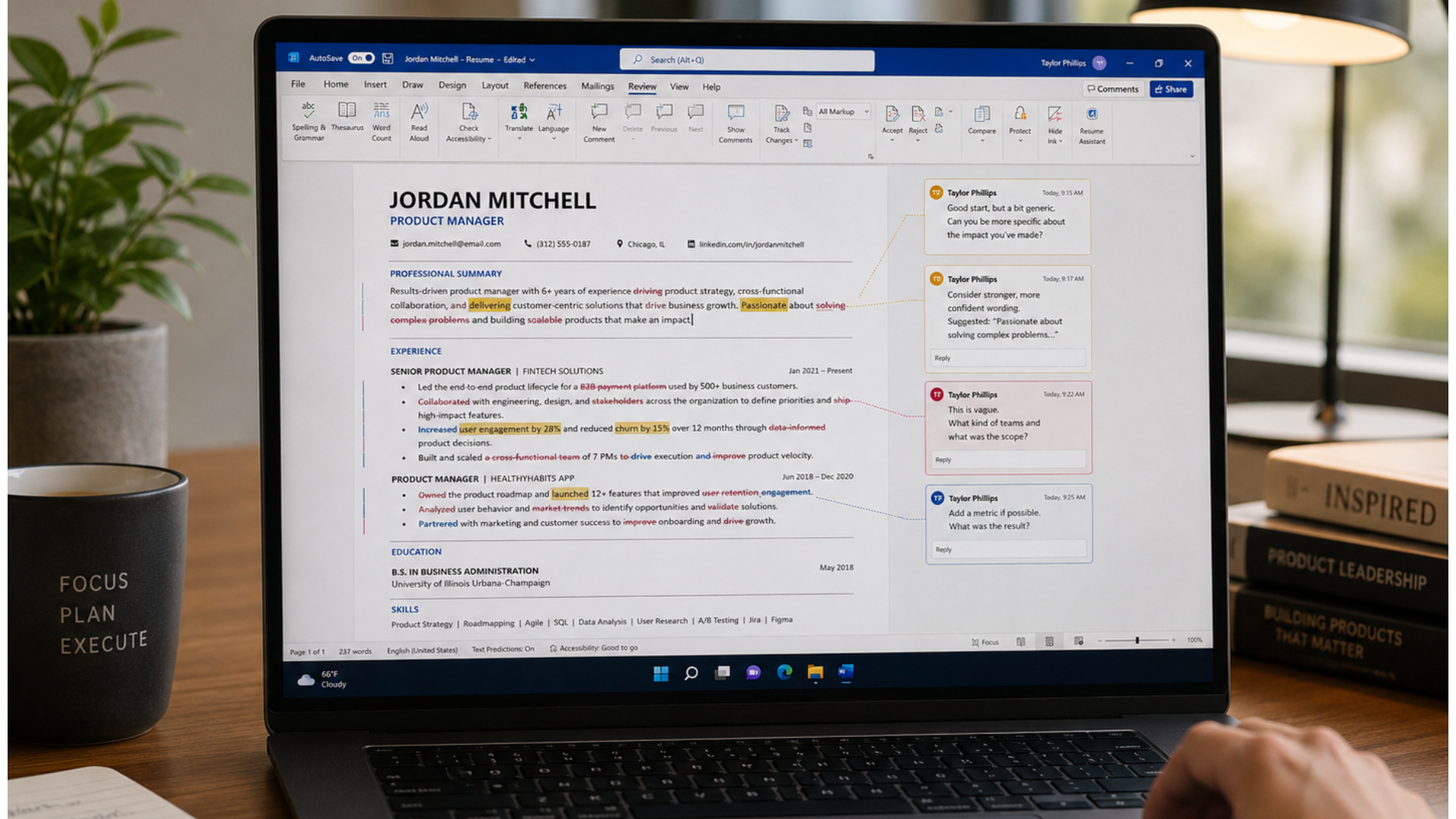
They remove the details that build trust. Generic statements such as “Results-driven professional with a proven track record of delivering excellence” appear across hundreds of applications. Recruiters at Jobs360 see this kind of phrasing regularly, and it does not help a candidate become memorable. What does help is specificity: the department you supported, the tools your team used, the type of accounts you handled, and the city where you worked. AI strips these details out in favor of polished generalities. Your job is to put them back in.
How to Edit AI Output So It Holds Up Under Review
Getting a draft from AI is the starting point, not the finish line. The editing process is where a generic document becomes a credible, personal resume. Use the following steps before submitting any AI-assisted application.
Verify every claim. Go through each number, result, and responsibility in the document. When the tool adds a metric you cannot confirm, replace it with an accurate figure or remove it. Recruiters may ask about any statement on your resume during an interview, so everything should be something you can explain with confidence.
Add details only you would know. Include the specific software your team used, the department you supported, the type of customers or clients you assisted, or the location where you worked. These details make your resume credible because they come from your real experience rather than from a language model filling in plausible-sounding content.
Match the tone to your career level. A fresh graduate’s resume should communicate preparation, capability, and willingness to learn. An experienced candidate’s resume should demonstrate ownership and measurable contributions. You can guide the tool by using a prompt such as:
“Rewrite this resume for someone with less than two years of experience who is applying for entry-level roles in the Philippines. Keep the language professional without making it overly corporate.”
Read the entire document from start to finish. Ask yourself whether each sentence reflects how you would describe your work during a conversation. When a phrase feels unnatural, overly formal, or disconnected from your experience, rewrite it in a simpler and more familiar way. The final document should sound like a polished version of you, not a collection of corporate filler.
Run a final format check. Save as .docx or PDF and confirm that headings, dates, job titles, and contact details are easy to locate. Avoid templates with multiple columns, icons, graphics, or decorative elements that applicant tracking systems may struggle to read. These are the same formatting fundamentals behind making your resume AI-friendly, and they apply whether you are writing from scratch or editing an AI-generated draft.
What Philippine Recruiters Notice After AI Screening
Passing an ATS is the first step, but the resume still needs to hold up when a recruiter reads it. Here is what stands out during that manual review.
Repetitive structure. When every bullet point follows the same formula of action verb, task, and metric, the resume reads as templated. One or two lines in that format can strengthen a section, but an entire page of identical rhythms signals that the content was generated rather than written.
Language that does not fit the career level. A fresh graduate applying for an entry-level administrative role whose resume sounds like it belongs to a senior director raises immediate questions. The tone should match where you are, not where the AI defaults to.
No personal detail. Recruiters want to understand what you actually contributed. Training five new hires during an internship, supporting a particular department during a system migration, or building a tracker your team continued using after you left are the kinds of details that distinguish one applicant from another. They are also the details AI cannot generate for you.
These patterns are often what separate a shortlisted application from one that was technically qualified but did not make it past the recruiter’s desk.
Final Thought
AI tools can save time, improve structure, and help Filipino job seekers describe their experience more clearly. But the version you submit needs to go further than what the tool produces on its own. Add the local context, real achievements, and specific details that make your application credible to a Filipino recruiter, not just readable by software.
Use the tool to draft. Then shape the final resume so it accurately and confidently represents who you are and what you have done.